

13 years in small construction machinery
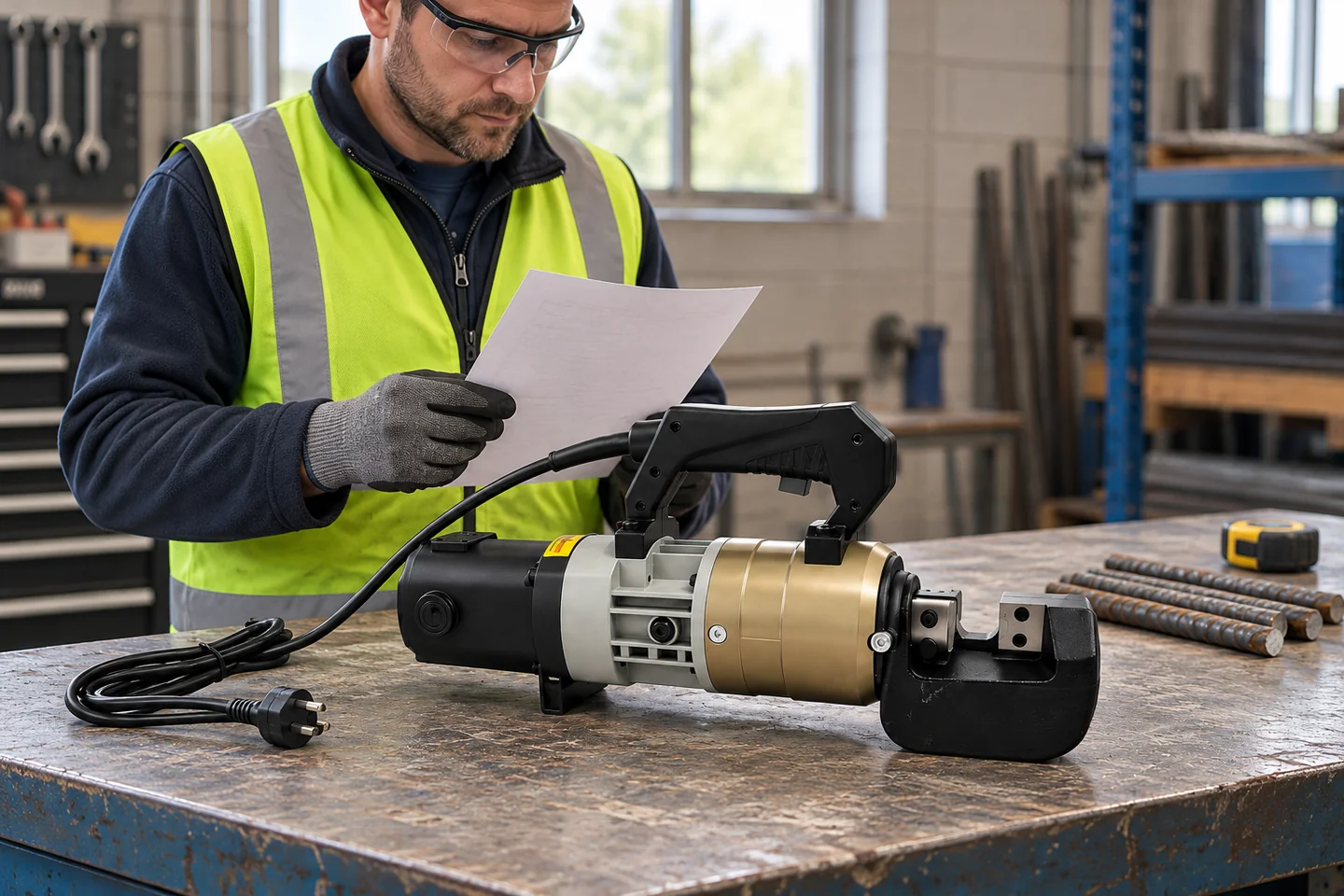
A 25 mm portable rebar cutter is worth considering when the tool needs to reach the workpiece. The HENING RC-25C is a corded hydraulic cutter with a listed 8–25 mm range. Whether it fits your job depends on the steel, access, available power and amount of cutting—not the diameter label alone.
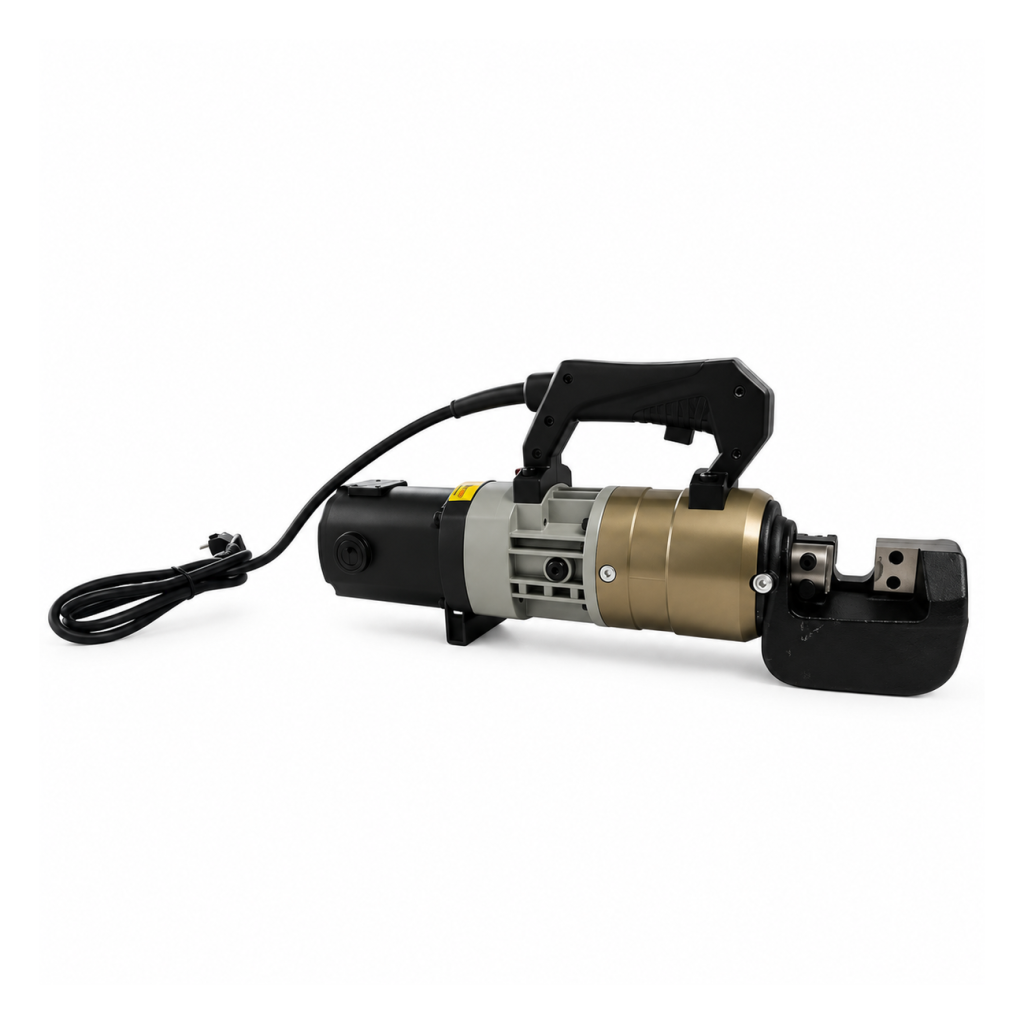
Where does a portable cutter fit?
Start with the route the steel takes through your job. If bars arrive at one preparation bench, a fixed cutting station may be convenient. If the cutting point changes, moving a portable tool to the bar can be more practical than moving every piece back to that bench.
Possible jobs include preparing short lengths near a work area or making occasional adjustments before assembly. The cutting head still needs suitable access, and the workpiece must be supported as the instructions require. A portable design does not make every position or installed bar suitable for cutting.
For repetitive yard production, compare the complete workflow with a stationary machine. Our GQ45 versus GQ50 guide covers that different machine class.
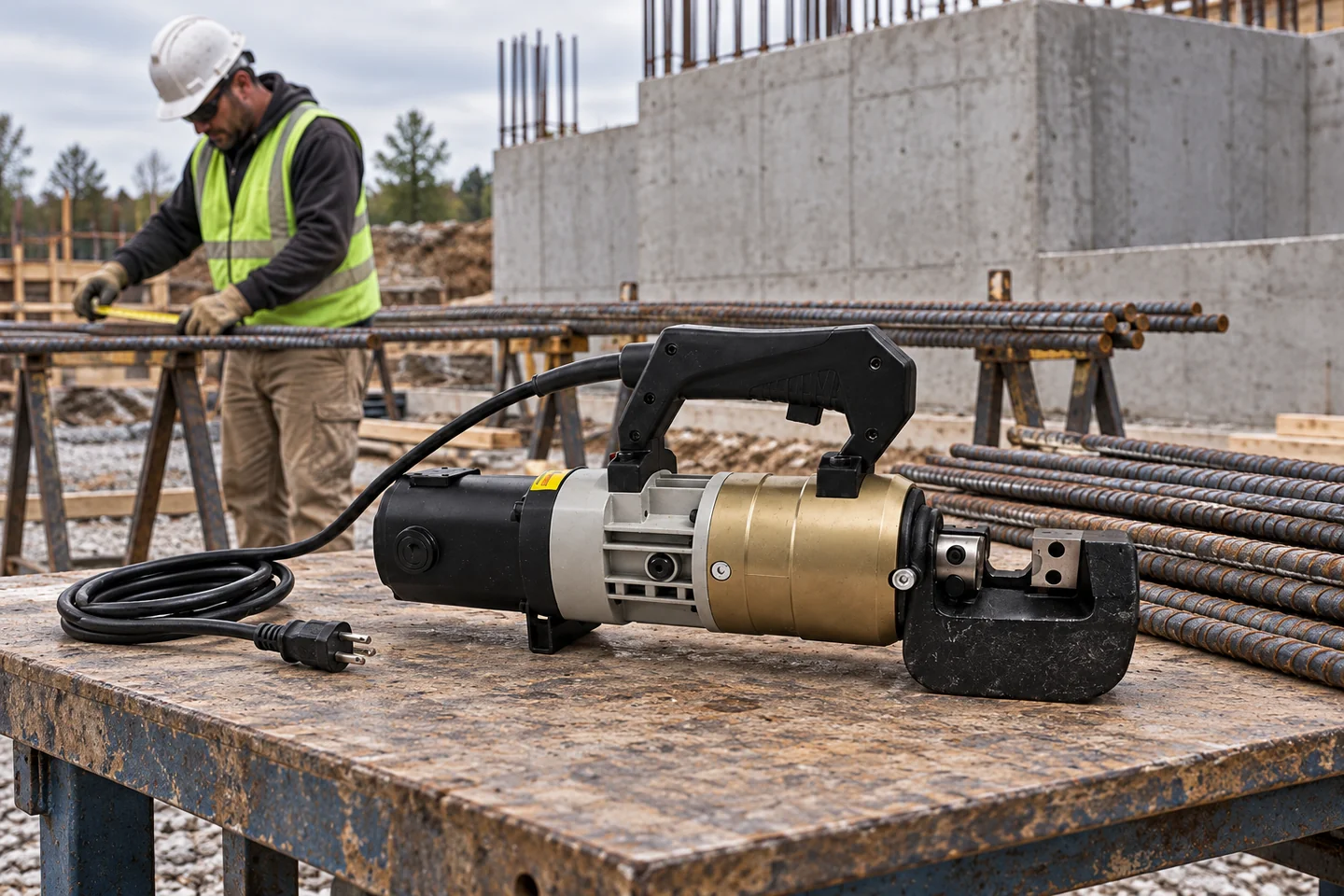
What does the RC-25C specification tell you?
The HENING RC-25C product page gives these reference figures. They are useful for shortlisting a tool before agreeing the exact material and configuration.
| Listing item | Published reference |
|---|---|
| Cutting range | 8–25 mm |
| Supply voltage | 220 V |
| Power | 1.8 kW |
| Cutting-time entry | 3–5 seconds |
The product page notes conflicting weight entries. Net weight and packed weight therefore need a separate confirmed figure.
Check the steel, not just “25 mm”
Two bars with the same nominal diameter do not necessarily present the same cutting task. The steel standard, grade and plain or ribbed profile belong beside the diameter in your inquiry. The RC-25C listing does not identify a material grade next to its 8–25 mm range.
For example, a contractor mainly handling 12 mm and 16 mm bars should describe that normal work, then list any occasional 25 mm requirement separately. This gives the supplier a useful job description rather than a single maximum size. It does not establish that the cutter is approved for any of those materials.
A useful capacity question: “Can this RC-25C configuration cut our stated bar grade and diameter, using the supplied blades?” Attach the material designation or certificate where available.
A representative demonstration should identify the tool, steel and diameter, then show the resulting cut ends. An unmarked bar in a short clip provides much less information.
What does a 3–5 second cut mean?
The listing’s cutting-time entry is not an hourly production promise. It has no accompanying material identification, test sequence or duty definition. Measuring, positioning, supporting and removing the bar all add time around a cut.
Ask for a short, continuous sequence using the material you intend to process. Record what the timing includes, how many cuts were made and any pauses required by the operating instructions. This gives you a basis for planning the work without turning one quick cut into a full-shift output claim.
Frequent relocation can also change the result. A tool that suits occasional site work may not be the best arrangement for long runs of identical pieces.
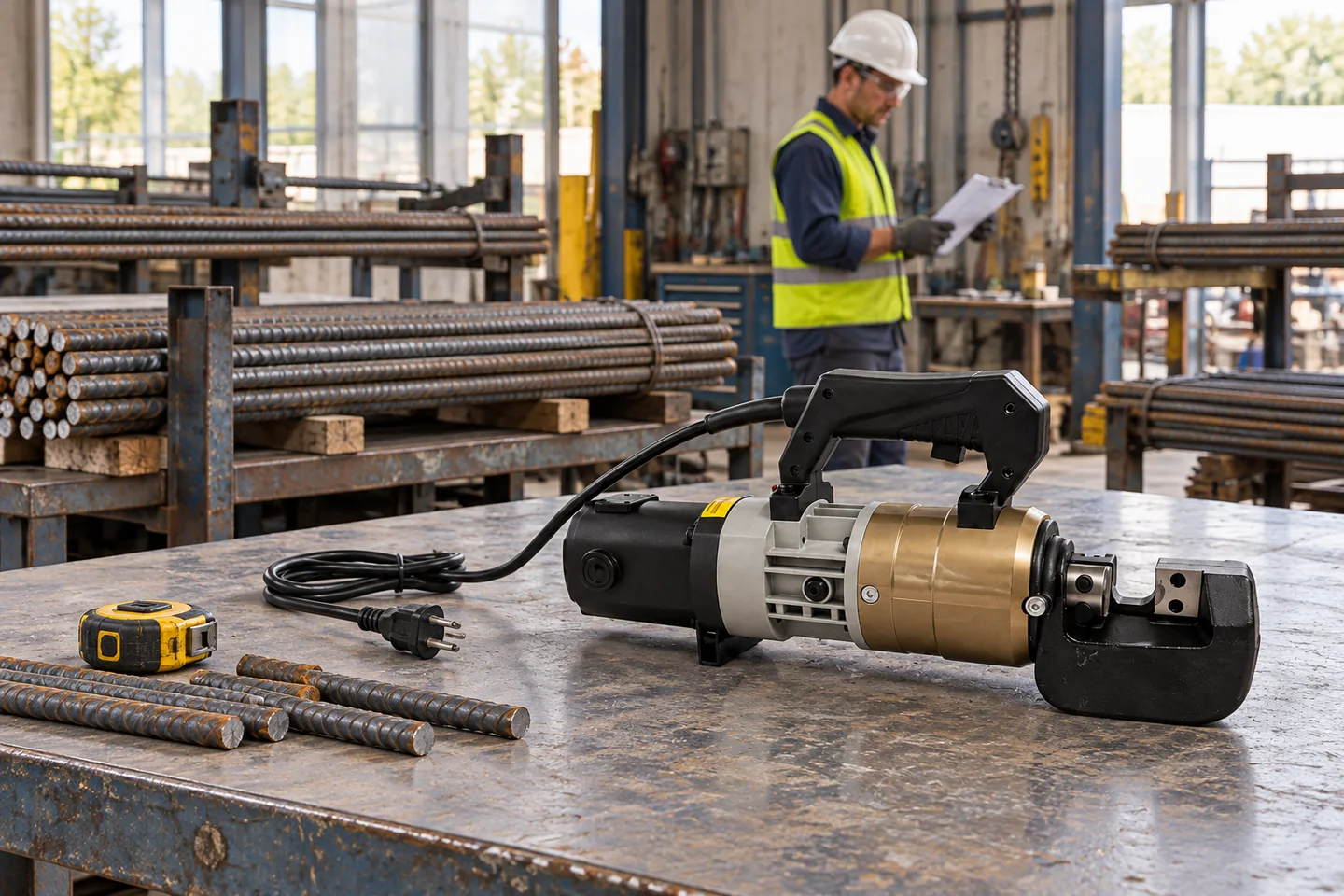
Check power, handling and replacement blades
The RC-25C is a corded tool. A 220 V entry alone does not define frequency, plug or the suitability of the site supply. Include those details when requesting the machine. Where a generator or extension supply is proposed, have the requirements checked against the delivered instructions and electrical ratings.
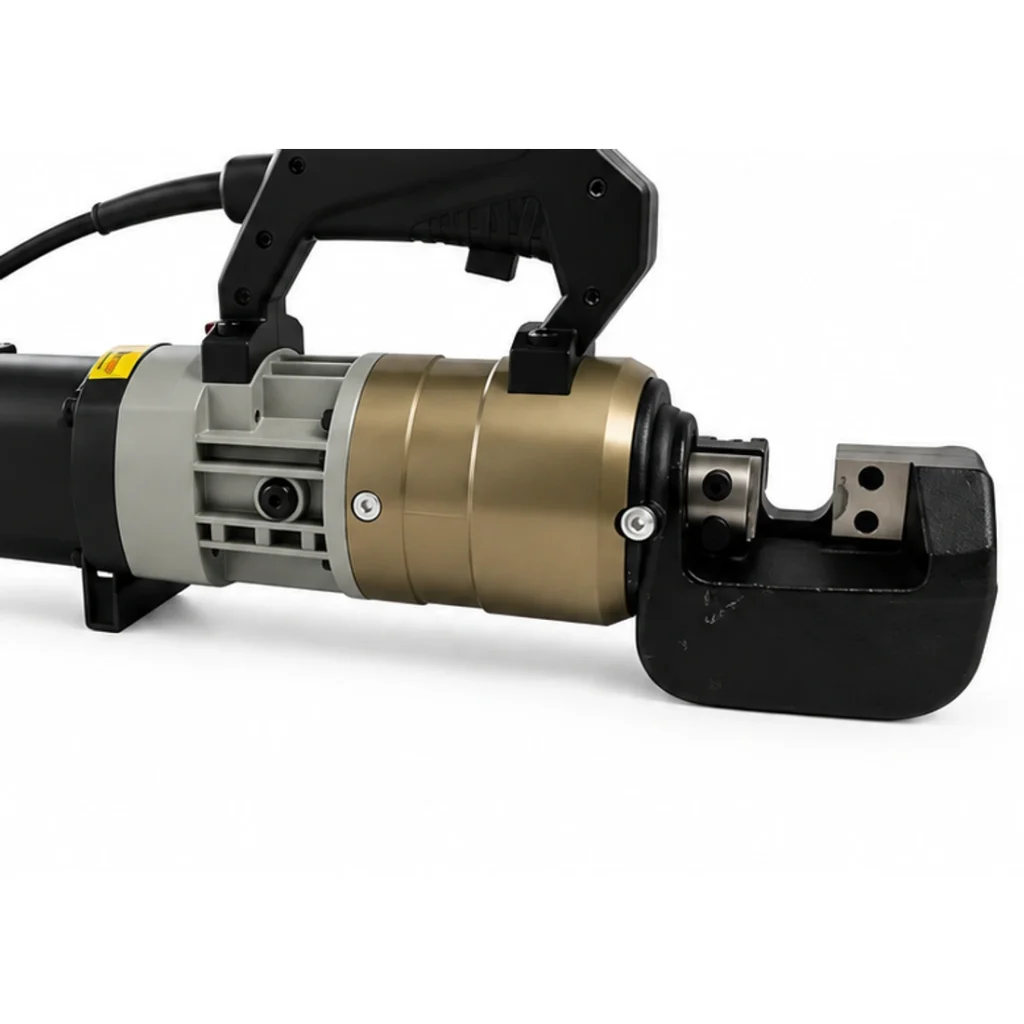
Order blades by confirmed compatibility.
Ask for the blade reference and the replacement set supplied for your exact cutter. A similar-looking blade is not enough to establish a match.
Handling deserves its own check. Ask for confirmed net weight, packed weight and the case or carton contents. Decide how the tool will be carried, placed and stored between jobs. “Portable” describes the arrangement; it does not settle whether its weight suits your crew.
Keep the supplied manual and parts information with the tool. This model is listed for cutting. It should not be purchased as a bending machine simply because a supplier attribute mentions bending material.
Make the choice around your normal job
Shortlist the RC-25C if moving the cutting tool to the workpiece solves a real handling problem, and the material-specific capacity and power configuration can be confirmed. Compare a stationary cutter when most work stays at a preparation station or requires repeated batches.
For buyers in Russia or Kazakhstan, send the steel designation used on the project rather than substituting a translated grade from memory. Add your destination city and electrical requirements so the quotation addresses the machine you can actually use.
Is the RC-25C suitable for your bars?
Send HENING your steel grade, usual and largest diameter, expected cuts per day, power supply, quantity and destination. We can review those details against the offered configuration and identify what still needs confirmation.
Ask about the RC-25C