
By David Liu | Mechanical Design Engineer at HENING Machinery | 13 years of experience in small construction machinery
Choosing a rebar cutting machine starts with the bars you handle every day. What is the usual diameter? What is the largest size on the project? Which steel grade do you use, and how many cuts do you need in a shift?
Those details make the GQ45 vs GQ50 comparison useful. A larger model number alone does not tell you whether a machine fits your work.
What is a rebar cutting machine, and where is it used?
A rebar cutting machine cuts reinforcing bars to the lengths needed for fabrication. Stationary machines of this type typically use an electric motor and a mechanical drive to move a cutting blade against a fixed blade, shearing the bar.
You will find them in construction-site rebar areas, steel reinforcement workshops and precast concrete plants. Common jobs include cutting bars for beams, columns and foundations, and preparing measured lengths before bending stirrups. This comparison covers stationary GQ45 and GQ50 machines. For cutting near reinforcement already installed on a structure, evaluate a portable cutter separately.
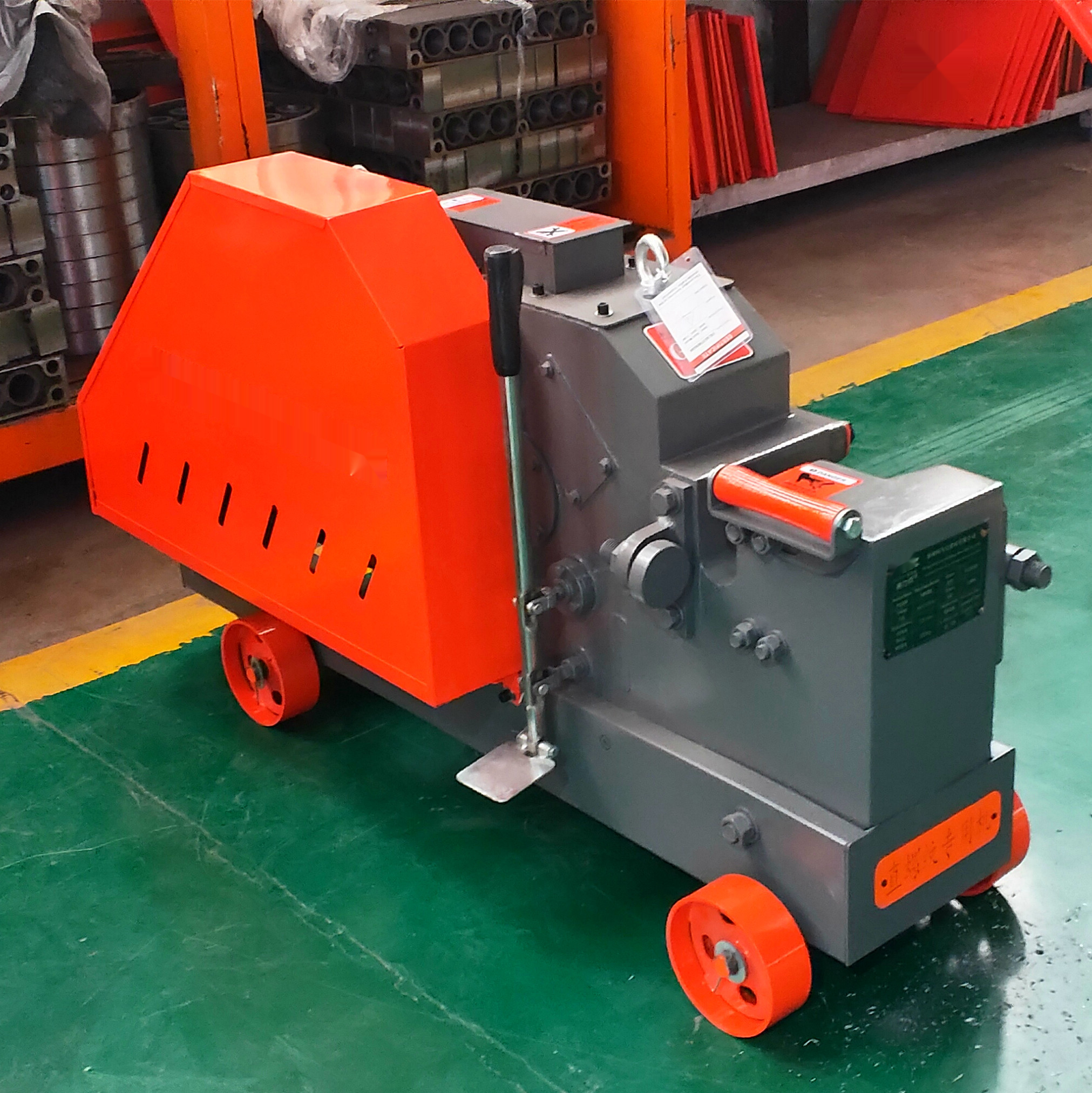
Machine overview and operation video
Where the listed specifications differ
HENING’s product pages list the following figures:
| Specification | GQ45 | GQ50 |
|---|---|---|
| Cutting diameter range | 6–32 mm | 6–40 mm |
| Motor power | 3 kW | 4 kW |
| Listed voltage | 380 V / 220 V | 220 V |
These figures are a starting point. The type of steel matters when you read the diameter range. A series specification chart in the supporting product material lists the GQ50 at 6–40 mm for plain round steel and 6–36 mm for ribbed reinforcing bar.
If you need to cut 40 mm ribbed rebar, ask for confirmation for that exact material. The general “40 mm” figure does not establish that capability.
See the GQ45 product page and GQ50 product page when preparing your inquiry.
When to consider the GQ45 or GQ50
If your usual bars fall within the GQ45’s listed range, start by checking its suitability for your steel grade and workload. A workshop mainly processing 16, 20 or 25 mm bars should request a quotation based on those sizes, along with its occasional maximum diameter.
If your project also needs larger bars, take a closer look at the GQ50. Its wider listed diameter range gives you a reason to compare it, but material compatibility still needs confirmation. For work close to the stated limit, provide the material certificate and request a demonstration using the same grade and diameter.
Buyers in Russia and Kazakhstan should include the steel designation used on their project. Do not assume that a diameter rating applies equally to every reinforcing steel grade.
Does a 4 kW motor mean faster cutting?
The motor rating does not tell you the number of finished cuts per day. The supporting catalogue gives frequency figures of approximately 32 r/min for the GQ45 and 28 r/min for the GQ50. Confirm what that notation measures before using it in a productivity calculation.
Feeding, measuring and handling bars also take time. A complete demonstration with your usual material is more useful than a general claim about high speed. Ask to see the material identification and the cutting process in the same demonstration, rather than comparing short clips with unknown bar sizes.
Details to settle before ordering
Confirm voltage, phase and frequency for the quoted machine. The two voltages on the GQ45 page do not mean that one delivered unit can switch freely between supplies. GQ50 supporting materials also show different voltage entries, so the quotation should state the configuration you will receive.
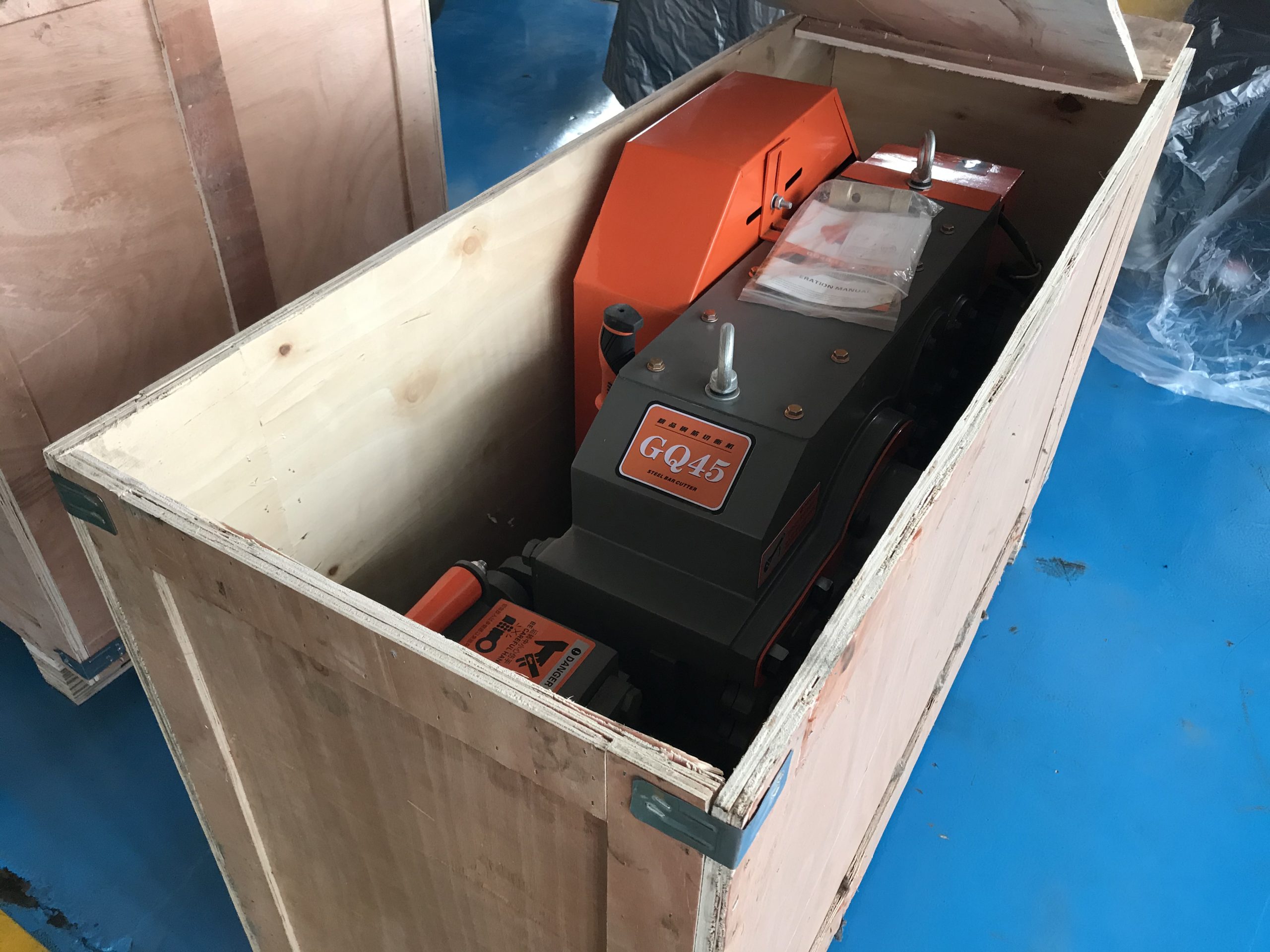
Then check net weight, overall dimensions, blade specifications and replacement parts. Packing dimensions and gross weight matter when arranging shipment. Product photographs should show the actual model and configuration being supplied.
Common buying questions
Can a GQ50 cut 50 mm rebar?
The current HENING product page does not state that capacity. Use the confirmed specification rather than reading the model number as a diameter rating.
What should I send with an inquiry?
Include steel type and grade, usual and maximum diameter, daily workload, electrical supply, quantity and destination. If spare blades are required, add them to the same inquiry.
Send your requirements to HENING. Comparing quotations for the same material and workload will make the choice between GQ45 and GQ50 much clearer.
About the author

David Liu is a Mechanical Design Engineer at HENING Machinery, responsible for the design and development of small construction machinery. He has 13 years of industry experience.